Can an AI Film Win Big? Jiaze Li from DiDi_OK on Money, Craft and Awards
Jiaze Li of DiDi_OK on where his ideas come from, how Candy was made and what may come next for AI cinema.
A word from AIMB
More than 130 years ago, the Lumière brothers had a new kind of camera, and moving pictures were entering a new era. The rules of the medium were still waiting to be written.
Today, a new wave of creators has AI and prompts. They are testing what these tools can do, finding their limits and searching for a new film language.
As 2026 draws to a close, we want to introduce AIMB readers to the people who, in our view, are driving the AI revolution in AI cinema right now. They are its pioneers. This series is about them: their films, their methods and the ideas that move them.
A camera did not tell the Lumières what to film. A prompt alone does not tell a story. That still begins with a person.
Meet AI Filmmakers to Watch.
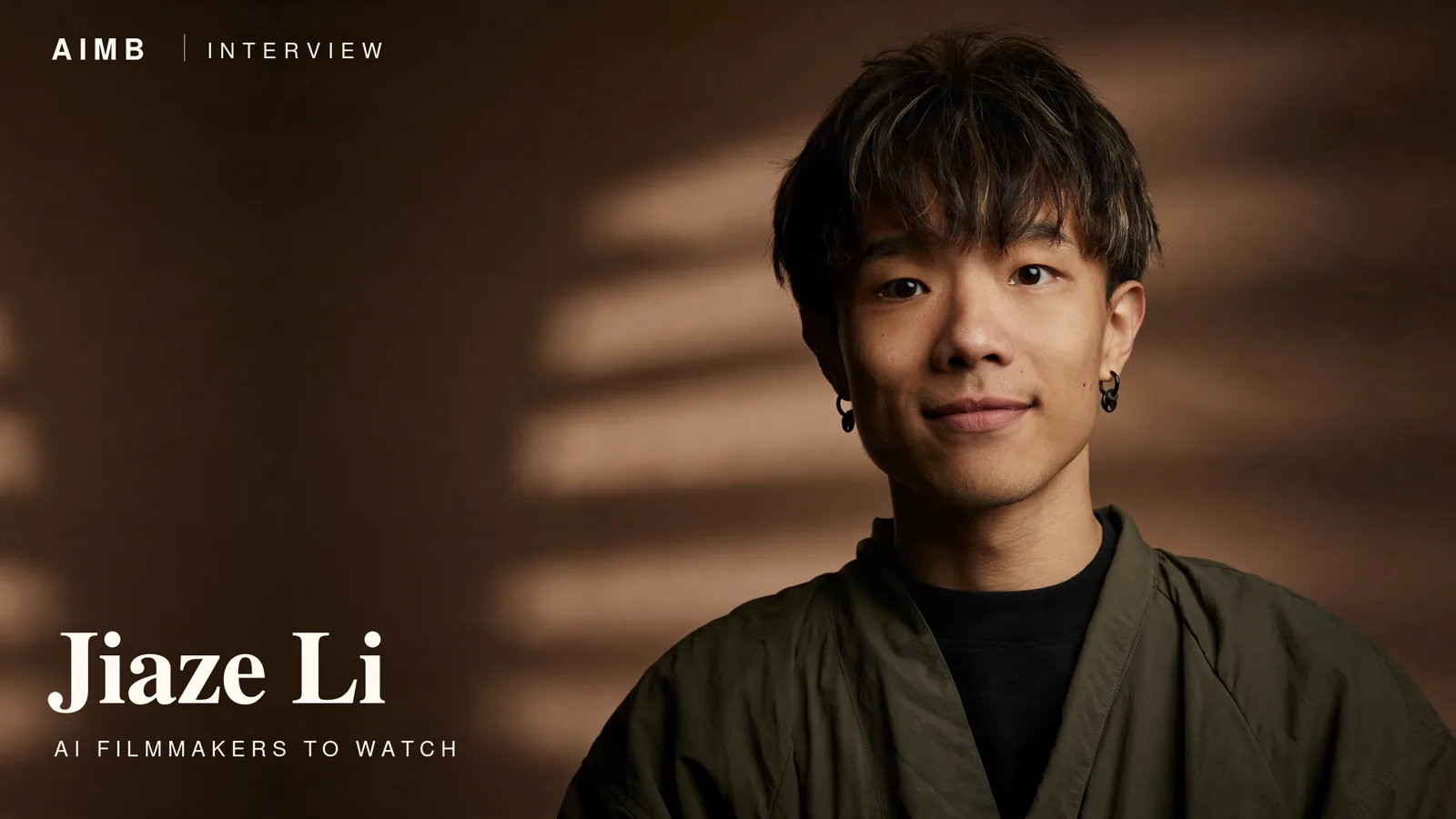
Jiaze Li is the director and writer of Website and Candy and part of the independent filmmaking team DiDi_OK. We talked about where his ideas come from, how Candy was made and what may come next for AI cinema.
Where did you grow up, and how did film come into your life?
— I grew up in Zhengzhou, in Henan Province, in central China. One of the best-known places in the area is the Shaolin Temple, which people often associate with Chinese kung fu. I don’t know any kung fu myself, though—apparently, that skill doesn’t come in the local starter pack.
As a child, I dreamed of becoming a game designer, and I put quite a lot of time and effort into pursuing it. But once I actually tried it, I gradually realised it might not be quite the right fit for me.
Filmmaking became part of my life mainly because I’ve always had a lot I wanted to express. Whether we’re responding to society or moving through different stages of life, we all have feelings and ideas we want to share, and we hope someone will respond. Whether I see something that makes me uncomfortable or encounter something I love or find deeply moving, I want to turn that feeling into images and share it. Filmmaking is my way of starting a conversation with the world: I put my feelings into images, and I’m curious to hear what people have to say in return.
Is filmmaking your full-time job? What is your life like outside it?

— Filmmaking isn’t my full-time profession. My day job is as an AI advertising director at WPP in London. There’s certainly some overlap, but I consciously keep my professional work and personal projects separate. I want my own films to remain non-commercial—a pure form of self-expression, with as little outside interference as possible. At work, I respond to all kinds of demands; in my personal projects, I’d like to leave some room to listen to myself.
My everyday life is pretty quiet. I rarely go out and spend most of my time alone at home, playing games, watching films I enjoy, or reading. If someone made a film about my daily routine, the editor might struggle—there wouldn’t be much of a plot to work with.
But that’s the pace I’m used to. It might seem a little boring from the outside, but I’m comfortable having some quiet time and doing the things I like.
“Unexpected, but somehow it makes perfect sense”
How would you describe your visual style? What shapes your aesthetic?
— If I had to describe my style in one phrase, I’d say “unexpected, but somehow it makes perfect sense.” That’s the feeling I’m always chasing.
I want to start with something familiar from everyday life so the audience can immediately connect with it. But then, quite quickly, I want them to think, “Hang on, something’s not quite right here.” I love that feeling—everything makes sense, yet something is slightly off.
That feeling can come from details we take for granted or overlook. When you magnify them, something familiar starts to feel unfamiliar, and you experience it differently. I’m drawn to that contrast and to the absurdity that grows out of ordinary life.
My aesthetic sensibility has been shaped by games, books, films, animation, and music. So I suppose all those hours I spent gaming as a kid were, in a way, research for what I do now—even if I didn’t know it at the time.
Which creators have influenced you most?
— The first is Liu Cixin, the author of The Three-Body Problem. He hasn’t just influenced how I think about stories—he’s influenced how I see the world.
I’m particularly drawn to how he treats characters and ideas. His characters aren’t always the centre of the story: the real protagonist might be a concept, a force, or a law of the universe, with personality and emotions giving way to a larger idea. There’s something quite ruthless about that, and that’s precisely what appeals to me.
In both The Three-Body Problem and his short fiction, he keeps overturning your expectations. You think you understand his world, then a few pages later you realise you were being far too optimistic. Those shocks make you feel the indifference of his universe: it won’t give you special treatment just because you’re the main character.
The second is Jiang Wen, my favourite Chinese director. I love his humour, his fast, rhythmic editing, and the distinctive personal voice behind the absurdity. His films often make you laugh first, and only afterwards do you realise how sharp the joke actually was.
Visually, the artist I admire most is Alberto Mielgo, who directed Jibaro and the first-season episode The Witness in Love, Death & Robots. Whether it’s his traditional oil paintings, his animation techniques, or his ability to convey personal emotions through images, I think his work is extraordinary.
Your three favourite films made without generative AI?
— I’ll have to bend the rules slightly: for two of my choices, I can’t bring myself to pick just one film, so I’m counting the whole series.
The first is Jiang Wen’s Let the Bullets Fly. It has tremendous impact, a fascinating narrative structure, and a lot to say. Look at it from a different angle, and you may come away with a completely different interpretation.
I love a metaphor Jiang Wen has used about his creative approach. Roughly translated: “I made all these dumplings just for this little dish of vinegar.” For an international audience, I’d adapt that to: “I made this entire plate of fries just for the ketchup.”
To me, the ketchup is what the filmmaker really wants to express, and the fries are the film itself. You’ve prepared this whole meal because there’s one flavour you really want people to taste. I relate to that approach: a work should have something at its core worth expressing—something meaningful, with tension and force. Of course, the fries still have to taste good.
The second is The Lord of the Rings trilogy. I love its sense of epic grandeur, reminiscent of a golden age: in the face of overwhelming adversity, different people come together to struggle and sacrifice for a shared purpose. I aspire to that in my own work. It’s not just the spectacle that moves me, but the courage behind it—the willingness to stand together despite everything. That’s one of humanity’s most precious qualities.
The third is The Matrix series, particularly the original trilogy. I admire how it turns ambitious, complex ideas into a world you can see and feel, with its visual design and atmosphere. You’re not just understanding an idea; you feel as though you’ve stepped inside it.
And three AI films or series by other filmmakers that everyone should watch?
— At various AI film festivals and competitions, I’ve discovered the work of some incredibly talented filmmakers.
The first is Costa Verde by Simon David Miller’s team (AIMB note: Costa Verde was written and directed by Léo Cannone). I was genuinely impressed by its cinematic quality and storytelling.
The second is The Cinema That Never Was by Mark Wachholz. He has created several award-winning films, and I particularly appreciate the depth of his ideas and his distinctive approach to storytelling.
The third is A Face Only a Mother Could Love by Robert Gaudette. It’s a remarkable example of how AI filmmaking can deliver emotionally compelling stories.
Meeting other filmmakers through these competitions has been one of the most rewarding parts of my creative journey. It’s always interesting to see how differently people approach filmmaking using similar technologies.
What exactly is DiDi_OK, and who does what?
— DiDi_OK is our independent filmmaking team. It consists of just three people: me, my girlfriend, and a close friend I’ve known for years. We all have day jobs, so we make our personal projects in our spare time. It’s a small team with three fairly full calendars.
The division of labour is straightforward. I handle the scripts and all the AI generation; my girlfriend handles the editing. She’s a content editor at ITV and brings a strong understanding of structure and pacing, shaping the material into a story that flows. My friend mainly handles visual effects and the technical side. When a shot requires a workflow combining AI-generated material with 3D, he takes care of the technical work needed to make it happen.
Basically, I write it and generate it, my girlfriend makes it work in the edit, and my friend tackles the “great idea—but how do we actually do that?” part.
How much time and money did Candy take? And how much would it have cost to make it the traditional way?
— Candy cost roughly US$30,000 to make, and production took about twenty-three days. Twenty-three days has become something of a habit for me. I can’t explain why that particular number—there’s no mysterious filmmaking theory behind it. It simply feels like a timeframe within which I can keep the project under control.
With traditional methods, both the cost and the production time would increase considerably. The film features many large-scale, visually complex scenes. My rough guess is that achieving them through physical sets, live-action shooting, or conventional visual effects could require hundreds, perhaps even thousands, of times the investment. That’s my personal estimate, though, not a fully costed traditional production budget.
The same goes for time. Building sets, casting, coordinating performers, and organising shoots all take time. For a three-person team working around our day jobs, AI offers the chance to bring images that might otherwise stay in our heads onto the screen.
“What if malice had a circuit breaker?”
Where did the idea for Candy come from?
— The inspiration came from a genuinely unpleasant flight. The passenger behind me kept harassing me, and when I asked the cabin crew for help, the situation wasn’t easily resolved. The experience stayed with me, along with a thought that eventually became a film. In a way, that was the flight’s only extra benefit.
As I developed it, I thought about how we all encounter malice in everyday life. Often, we tell ourselves to let it go. But while an unpleasant encounter between individuals may pass, we shouldn’t so easily overlook the harm embedded in social structures, or patterns we’ve grown so accustomed to that we no longer notice them.
Everyday harassment, destructive competition, and war aren’t equivalent. But they led me back to a question: once harm has begun, what allows it to continue?
So I proposed a hypothetical: what if malice had a circuit breaker? What if, the moment it emerged, it was forced to stop? What would that world look like?
It’s a thought experiment, and I don’t have a definitive answer. I wanted to put the question out there, offer a starting point for reflection, and hear how others might respond.
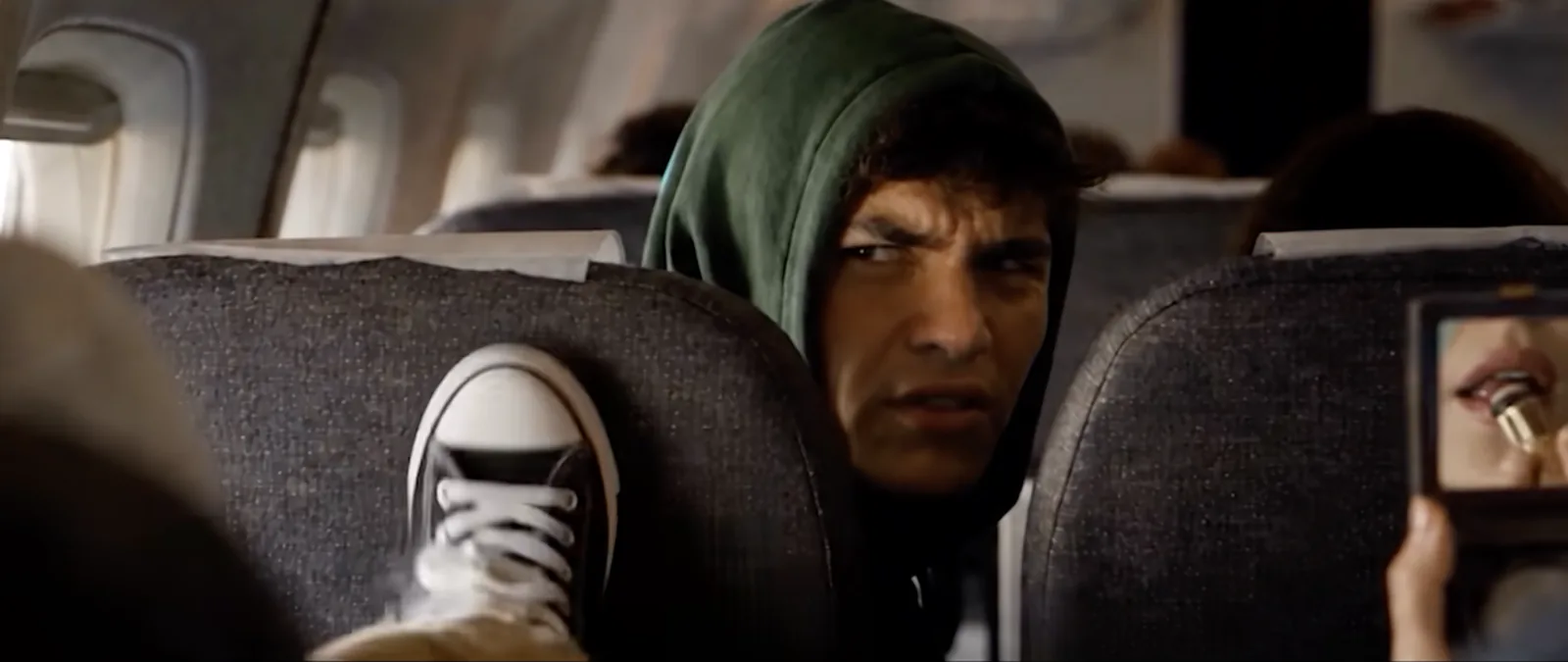
What was the hardest scene to create, and how many attempts did it take?
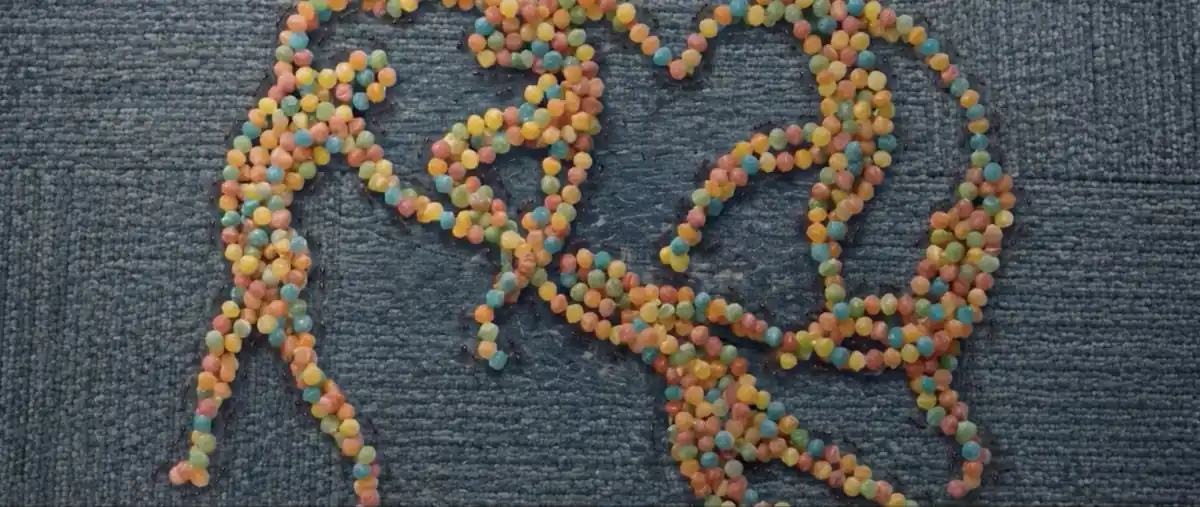
— The most challenging sequence was a single continuous shot. It comes just after the ants have finished pushing the sugar, when some characters have regained their bodies. The camera keeps pulling back through different settings, revealing different characters’ reactions across time and space.
I deliberately avoided transitions or foreground objects that could conceal a join. I wanted the audience to see everything happen clearly: the spaces and characters change, but the shot never breaks. The challenge was that I’d removed all the places where I could hide a little trick.
Traditional live-action production could require extensive compositing and visual effects for a shot like this. I wanted to generate the entire sequence directly with AI.
Of course, “directly generated” doesn’t mean “right on the first try.” It took at least a thousand iterations, and the cost was substantial. On screen, it’s one continuous shot; behind the scenes, it was a thousand fresh starts.
I’m very happy with the result: it fully realised my original vision. The shot required no post-production software to stitch it together or composite it. For my own filmmaking practice, that felt like a significant technical breakthrough.
If you could keep only three AI tools, which would they be?
— I’d choose Seedance, ChatGPT, and Suno. Essentially, one handles the visuals, one helps me think, and one makes the music.
The first is Seedance. In my experience, it offers the strongest combination of stability, control, and flexibility. Generating a beautiful image matters, but realising your ideas consistently and reliably matters just as much. That makes it my essential visual tool.
The second is ChatGPT. I use it to talk through ideas and research information, and I use its image-generation capabilities to create initial hand-drawn-style visuals. It supports both early thinking and visual preparation, so it’s an important creative assistant.
The third is Suno. All my music is generated directly with Suno, which makes it essential to my process. Together, these three tools cover my core needs, from developing ideas and creating visuals to generating music.
Can someone with no filmmaking experience make a good AI film today? Where should a beginner start?
— I believe someone with no directing or editing experience can absolutely make an AI film of their own today. Whether it’s good isn’t determined by technical knowledge alone. Sometimes, learned rules can limit your expression. If you’re too concerned with doing everything “correctly,” the work can lose its freshness and playfulness.
My biggest advice is simply to start. Don’t let the technical side intimidate you, and don’t wait until you know everything before giving yourself permission to create. Otherwise, the preparation could take longer than the film.
When I was learning game development, I read Jesse Schell’s The Art of Game Design: A Book of Lenses. It quotes a saying among game designers: “Your first ten games will suck—so get them out of the way fast.” It sounds harsh, but I find it encouraging. It takes away the pressure to amaze everyone with your very first project and gives you permission to make something imperfect.
For me, the fastest way to grow is to keep finishing things, expressing ideas, and sharing your work. Then you learn from feedback, make adjustments, and move on to the next project. You don’t have to become an accomplished filmmaker before making films. Making films is how you get there.
Which film would you erase from your memory to watch it for the first time again?
— I’d choose The Matrix. This comes from something in my own life: through a series of coincidences, my girlfriend has never seen any of the films. When our friends found out, their immediate reaction was envy—she somehow still has a brain that hasn’t seen The Matrix.
For us, discovering its world and having our understanding of reality gradually turned upside down is something we can’t repeat. She still has all of that ahead of her. You can rewatch a film whenever you like, but you only get that first shock once.
So I’d choose The Matrix. Without doing a thing, my girlfriend has held on to the one ticket we all wish we still had: a first viewing.
If you could direct a sequel to any film or series, what would you choose?
— I’d love to contribute to future film or television instalments based on Liu Cixin’s work, such as The Three-Body Problem or The Wandering Earth.
His stories have profoundly shaped my worldview and my approach to storytelling. Going from a reader deeply moved by those worlds to a filmmaker helping bring them to the screen would be an enormous honour.
Of course, humans tend to be rather insignificant in his universe—but I’d be very happy with a tiny place in the end credits.
A Hollywood studio offers you $10 million to direct a film. AI or traditional filmmaking?
— I don’t think AI and traditional filmmaking should be a zero-sum game. After all, the arrival of AI hasn’t suddenly made every camera in the world stop working.
For me, the story and what I want to express come first. Technology should help bring those things to life. I wouldn’t want a particular tool to dictate what stories I can tell or how I should tell them.
I’ll choose the approach that best serves the film. If it calls for live action, I’ll shoot it. If AI makes sense, I’ll use AI. And I’m happy to combine the two. What matters is whether the film achieves the effect I’m after and communicates what I really want to say.
Will an AI film gross $100 million in the next few years? What would it take?
— I believe that in the near future, we’ll see a feature made primarily with AI earn more than a hundred million dollars at the box office. The key to making that happen lies with the creators behind it.
Is the story moving enough? Is the way it’s told engaging enough? Can it connect with an audience? Those remain the essential questions. People are buying a cinema ticket, not signing up for a software demonstration.
Tools can help realise our imagination. But deciding what to express, why it matters, and how to make someone else feel it still comes down to people. That film will succeed because its creators use AI to tell a story people want to go to the cinema to see.
“I’d rather not let the box office take a seat in my director’s chair”
Can you make a living from AI filmmaking today, or is it still an expensive hobby?
— I think making a living through AI creation or related work is already commercially viable, and I believe quite a few people are doing it.
Personally, I’m not in a hurry to monetise my own films. Once making money becomes the goal, creative decisions can start to shift without you noticing. “What do I want to express?” can become “What will sell?” For now, I’d rather not let the box office take a seat in my director’s chair.
That’s just my choice at this point. AI filmmaking still has costs. For an individual or small team, achieving a result you’re happy with can require substantial investment.
Ultimately, it depends on what you want from creating, how much you’re willing to invest, and the standards you set. Right now, preserving the freedom to express myself comes first.
An Oscar, or a film watched by 100 million people?

— My first instinct would be the latter. I’d love to tell a story that more people can discover, enjoy, and want to talk about.
Connecting with an audience has always been one of my strongest motivations. I’m fascinated by how differently people interpret the same story. Sometimes they notice things I hadn’t even realised were there. At that point, listening to the audience might be more interesting than listening to the director.
Whenever someone shares their response or tells me the story made them think, I feel, “Yes, I’ve done something meaningful.” Something I created has left a small trace in someone else’s life.
An Oscar would be an enormous honour. But the chance to connect with that many people through a story would mean more to me.
“People will simply say, ‘It’s a film’”
Five years from now, no one can tell AI films from traditional ones. Should filmmakers still disclose how a film was made?
— If audiences can no longer tell the difference, I don’t think filmmakers necessarily need to make “AI-generated” a prominent label.
By then, AI will probably be just another everyday tool in an established filmmaking process. We don’t usually specify whether an effect was made in Maya or Blender, and audiences don’t generally ask for its software résumé.
If people are curious, I’d be happy to share behind-the-scenes material on how we used AI to reach the result. That can be an interesting creative conversation in its own right.
But five years may be a conservative estimate. My sense is that within two or three years, AI could become a more mature and widely accepted part of filmmaking.
Ten years from now, will we still say “AI film”?
— In ten years, “AI film” may no longer be a label we need to emphasise. It probably won’t seem unusual either.
A generation will have grown up with films and television made with AI, and for them it will feel natural. They might ask, “Why did you use to make such a big deal out of it?”
Cinema has always evolved—from silent films to sound, from black and white to colour. Each change expanded its expressive possibilities and gradually became part of watching films.
The questions will still be: Is the story engaging? Do the characters move me? Is there an image I can’t get out of my head?
People will simply say, “It’s a film.” Then they’ll start arguing about whether it’s any good—and I’m fairly sure that part won’t change.
Which AI filmmaker should we be following over the next few years?
— Simon David Miller. I met him on the AI filmmaking competition circuit, and I genuinely love his creative style. I’m excited to see how he and his team develop their work over the next few years.
What are you working on now?
— I’m currently involved in a few projects that are still confidential. Some involve established film IP, and others are short films.
I can’t share any specifics just yet, so this is probably the question that requires the most self-restraint from me in this interview. Once I’m able to talk about them, I’ll be very excited to share more.
Photos: from Jiaze Li’s personal archive and the creator’s YouTube channel
Independent AI cinema coverage More from the Journal →